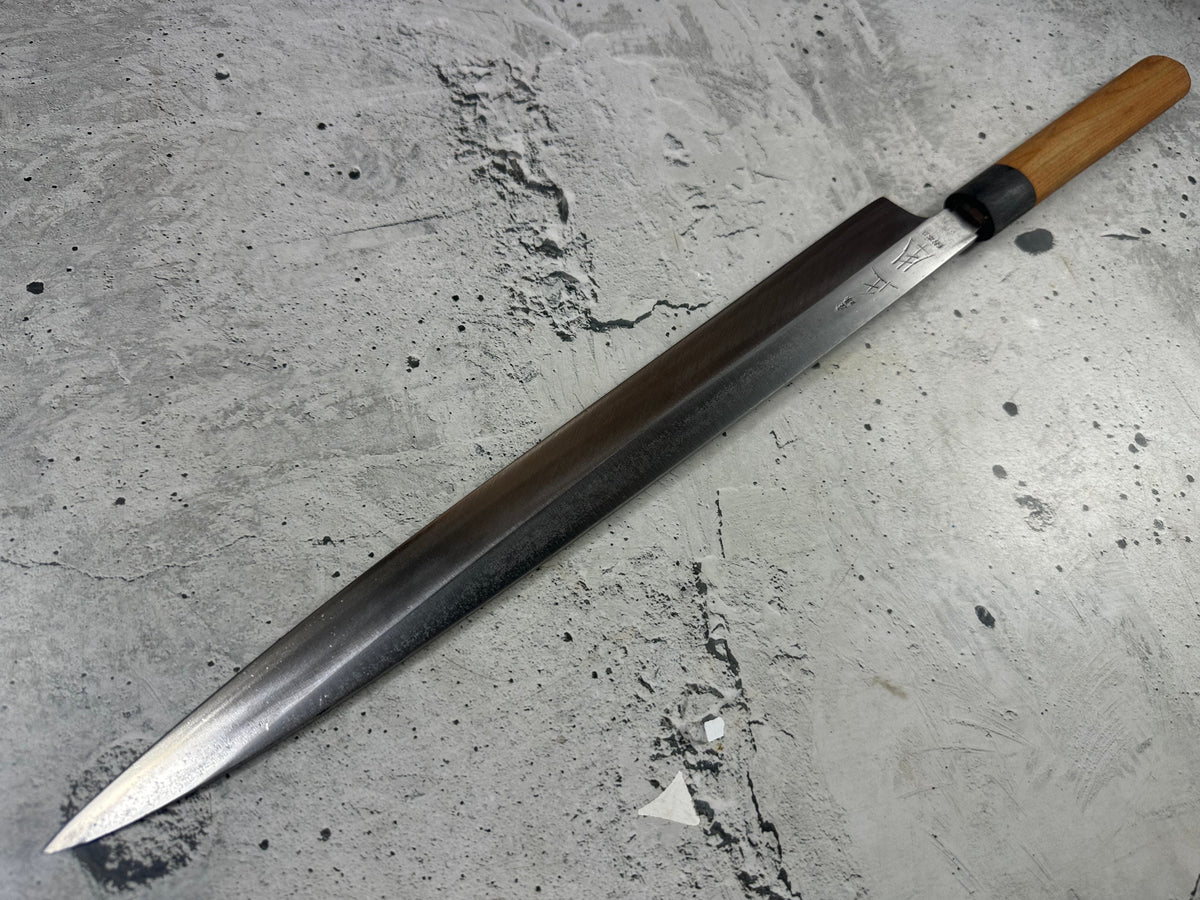
Experience traditional Japanese precision with a vintage Masamoto Sohonten knife set
This Masamoto Sohonten Traditional 3-Piece Carbon Steel Master Sashimi Set brings together a deba, usuba and yanagiba for whole-fish preparation, detailed vegetable work and sashimi slicing. A distinctive set for cooks and collectors interested in traditional Japanese single-bevel knives, it is listed with three individual original Masamoto Sohonten factory boxes.
The Specs
-
Maker: Masamoto Sohonten Co., Ltd., Tokyo, Japan.
-
Set: Three traditional Japanese knives: deba, usuba and yanagiba.
-
Blade material: Pure carbon steel. The specific steel grade is not identified.
-
Listed blade lengths: Deba 200mm, usuba 180mm and yanagiba 340mm. These are the existing recorded measurements, not independently verified measurements.
-
Edges: Traditional asymmetrical single-bevel geometry, listed for right-handed use, with a concave back (urasuki). A numerical edge angle is not recorded.
-
Handles: Wooden handles with dark ferrules, as shown in the photographs. The wood species and ferrule material are not confirmed.
-
Origin: Japan.
-
Packaging: Three individual original Masamoto Sohonten factory boxes, as stated in the existing listing.
-
Condition: Listed as vintage/used. The photographs show blade discolouration, surface marks and handle wear. Please examine the photographs for the visible condition of each knife.
-
Item number: 2372.
Three specialist knives, three distinct roles
Deba 200mm: whole-fish preparation
The substantial deba profile and thick spine suit traditional whole-fish breakdown and filleting, including controlled work around fish heads, bones and cartilage. It is not a general-purpose bone chopper or a poultry cleaver. Avoid striking, twisting or forcing the edge through hard material.
Usuba 180mm: precision vegetable work
The rectangular, Kanto-style usuba has a flat cutting profile for precise push cuts, fine julienne and decorative vegetable preparation. Its traditional uses include katsuramuki, the rotary peeling technique used to create thin sheets of daikon radish.
Yanagiba 340mm: sashimi and protein slicing
The long, willow-leaf yanagiba profile supports a smooth, single-stroke draw cut rather than repeated sawing. It is suited to delicate sashimi preparation with tuna and salmon, and careful slicing of boneless proteins such as wagyu.
Masamoto Sohonten heritage and design
Masamoto Sohonten traces its knife-making history to 1866, with its Tokyo shop opening in 1890. This set brings together three established forms of the traditional Japanese kitchen, moving from fish preparation to fine vegetable cutting and delicate finishing slices.
Single-bevel blades combine a broad cutting bevel with a hollow-ground back, supporting precise cutting when used with the appropriate technique. Reactive carbon steel develops a changing patina with use, which may include blue-grey tones. Patina is part of the material's character, but it does not make the blade rustproof. The original branded boxes listed with the set add to its presentation and collector appeal; packaging alone does not establish authenticity or unused condition.
Care & Maintenance
-
Wipe frequently: Keep the blades clean and dry during preparation, particularly after contact with acidic or salty ingredients.
-
Hand wash only: Wash with warm water and mild soap immediately after use. Never soak the knives or put them in a dishwasher.
-
Dry immediately: Thoroughly dry each blade with a soft cloth after washing, including the area beside the handle.
-
Oil for storage: Apply a light coating of food-safe mineral oil or food-safe camellia oil to the blade faces before extended storage.
-
Sharpen appropriately: Use Japanese water stones and correct single-bevel technique, or choose a sharpener experienced with traditional Japanese knives. Do not use honing steels or pull-through sharpeners.
-
Protect the edges: Store clean, dry knives with the edges protected from contact with other hard objects. Do not cut frozen foods or use glass or metal cutting surfaces.