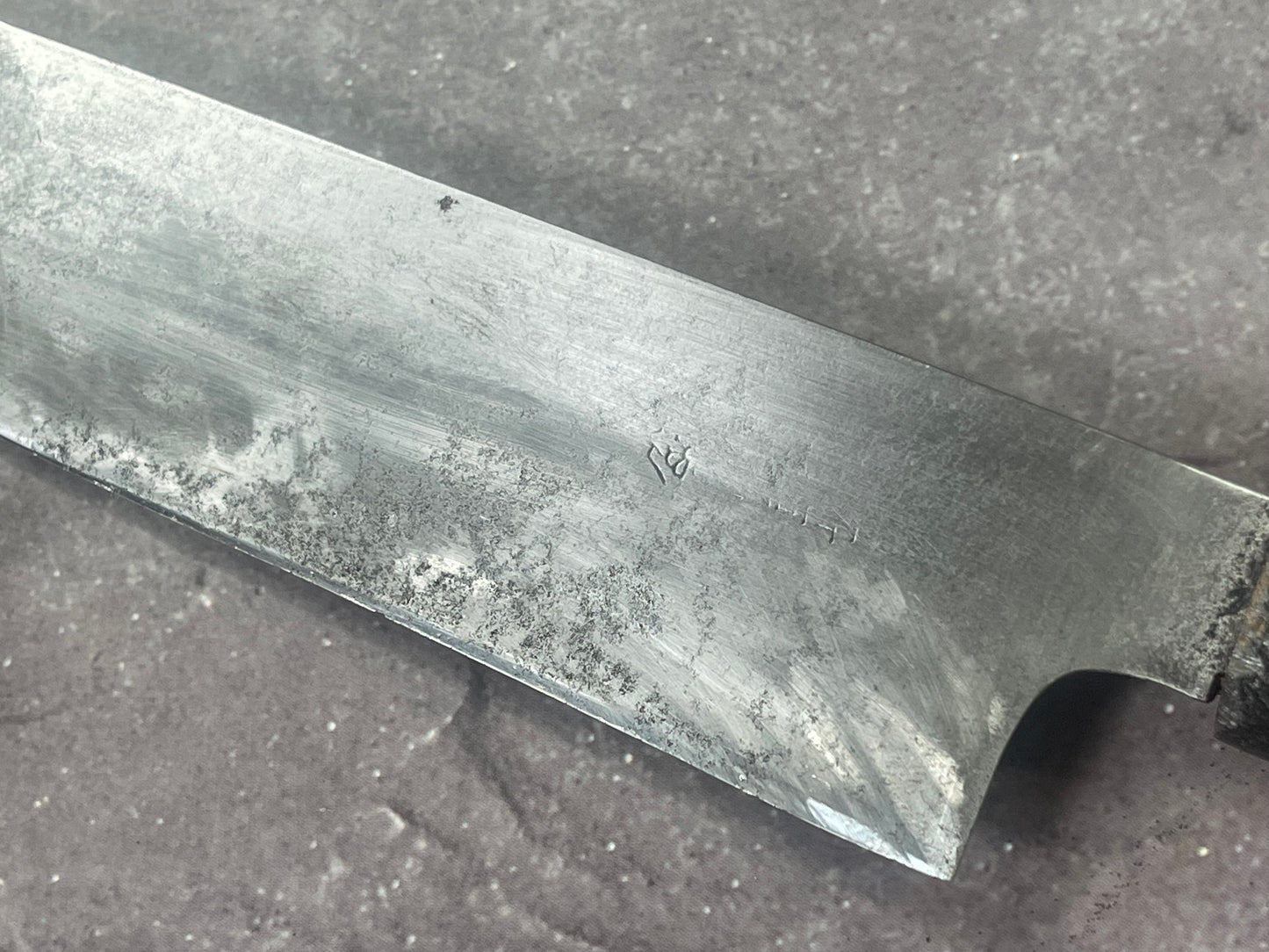
Vintage Japanese Sakai Ishimatsu-saku Usuba Knife 220mm Carbon Steel 1677
Couldn't load pickup availability
Experience generous reach with a vintage Japanese knife
Listed as a Sakai Ishimatsu-saku usuba, this pre-owned knife pairs a recorded 220mm carbon steel blade with a magnolia wood handle. Its usuba title, earlier santoku description and recorded double bevel conflict, so the exact knife classification and geometry remain subject to confirmation.
The Specs
- Recorded maker name: Sakai Ishimatsu-saku
- Recorded inscription: 堺石松作; reading and attribution not independently authenticated
- Listed type: usuba; earlier narrative describes a santoku
- Steel recorded: carbon steel; exact grade not specified
- Blade length recorded: 220mm
- Overall length recorded: 380mm
- Handle recorded: magnolia wood
- Bevel recorded: double bevel; requires physical confirmation because of conflicting classification
- Blade thickness recorded: 1.8mm; measurement location not specified
- Weight recorded: approximately 200g
- Hardness: earlier 58 HRC figure requires verification
- Construction previously listed: fully forged, full tang; not independently verified
- Origin recorded: Japan
- Condition: vintage, pre-owned; production date not established
Heritage & Use
The existing inscription notes read 堺石松作 as Sakai Ishimatsu saku, associating 堺 with Sakai, 石松 with the Ishimatsu name and 作 with making. These recorded readings do not establish an individual smith, family lineage or workshop history. The blade's recorded length offers reach for board preparation, but its working role and sharpening approach should follow a physical assessment rather than the title alone. Check the blade, edge and handle before use. No rarity, ready-to-use condition or steel-superiority claim is made.
Care & Maintenance
- Hand wash only; never use a dishwasher
- Dry immediately and avoid soaking the magnolia handle
- Remove active rust and apply a light coat of food-safe blade oil before extended storage
- Have the actual bevel geometry checked before honing or sharpening
- Sharpen on suitable water stones, preserving the existing geometry; do not convert the edge based on the title
- Consult a specialist sharpener where classification or geometry is uncertain
- Avoid bones, frozen food, impact work and twisting through hard ingredients
- Store clean and dry with the edge protected
Share