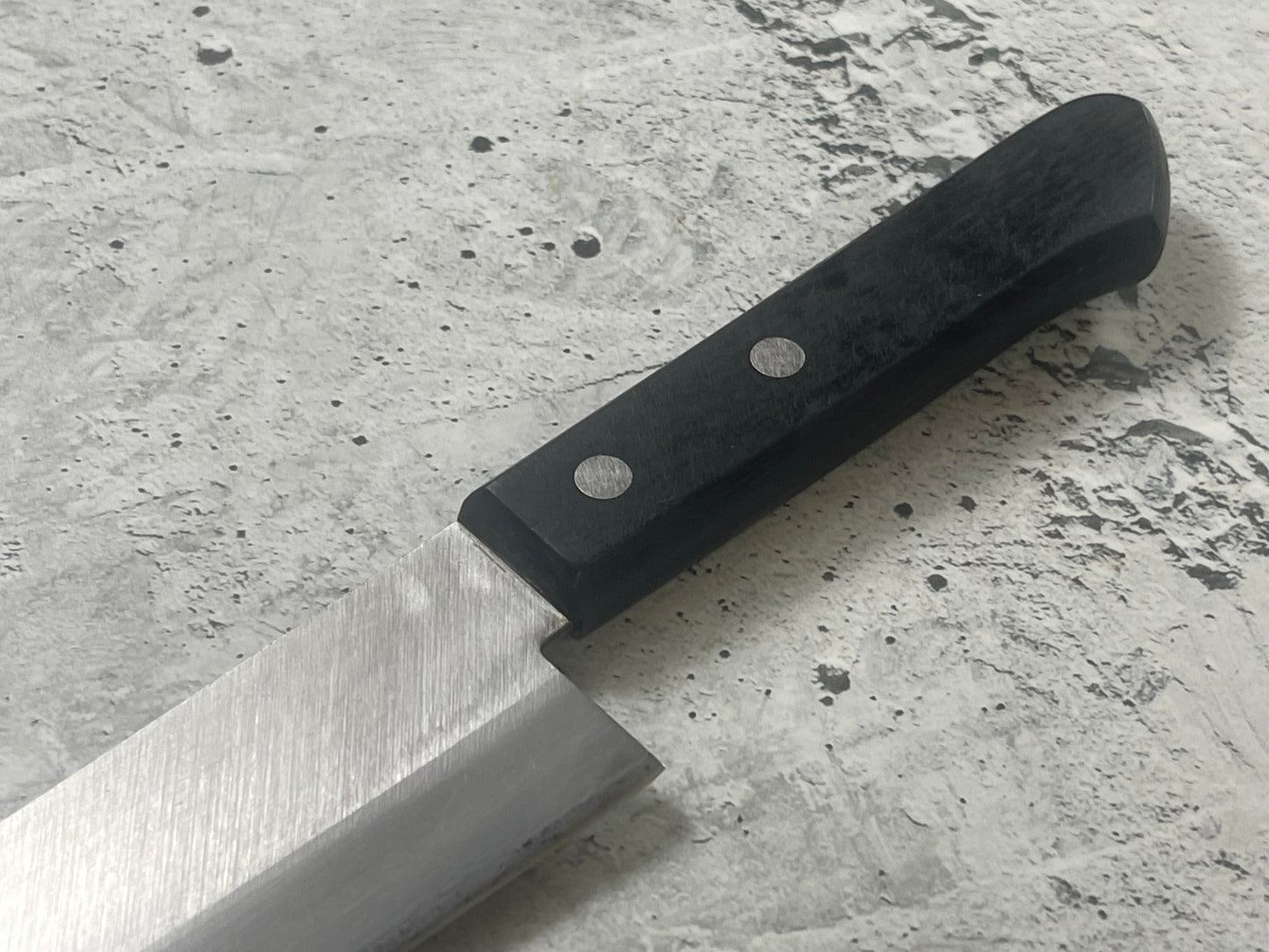
Vintage Japanese Musashi no Kuni Kōgetsu-saku Santoku Knife 180mm Made in Japan 1568
Couldn't load pickup availability
Experience Everyday Versatility with a Vintage Kōgetsu-saku Santoku
This vintage Japanese Santoku combines recorded high carbon steel construction with a wood handle and an all-purpose format for vegetables, fish and meat. Its recorded Musashi no Kuni and Kōgetsu-saku inscriptions preserve the knife's individual identity, while its pre-owned character appeals to cooks and collectors alike.
The Specs
- Recorded identity: Musashi no Kuni Kōgetsu-saku
- Recorded inscriptions: 武蔵国, 光月作 and 本割込
- Knife type: Santoku
- Steel: High carbon steel; exact alloy not recorded
- Recorded hardness: 58 HRC
- Recorded construction: Fully forged; Hon-Warikomi marking interpreted in the original notes as a hard carbon steel core between softer steel layers
- Blade length: Conflicting records - 180mm in the title, 170mm in the specifications; measurement requires verification
- Recorded blade thickness: 1.4mm
- Overall length: 290mm
- Handle: Wood
- Weight: 120g
- Origin: Made in Japan
- Condition: Vintage / pre-owned; described in the original notes as beautifully preserved
Recorded Inscriptions and Santoku Heritage
The original inscription notes read 武蔵国 as Musashi no Kuni, the historical region covering modern-day Tokyo, Saitama and parts of Kanagawa, and 光月作 as Kōgetsu-saku, a brand or craftsman-line name. They interpret 本割込 as Hon-Warikomi construction, with a hard carbon steel core clad between softer steel layers. These readings are retained as recorded information rather than newly authenticated identification.
The earlier notes associate the range with Japanese Traditional Crafts designation and retailers such as ほんまもん (Honmamon). That background does not independently establish certification or retail provenance for this individual vintage knife. The Santoku's three virtues refer to meat, fish and vegetables, and its flatter profile suits controlled push-cut preparation. Carbon steel develops natural patina with use and rewards careful drying and whetstone maintenance.
Care & Maintenance
- Hand wash only - never put in the dishwasher
- Dry immediately after washing to help prevent rust
- Apply a light coat of food-safe camellia or mineral oil periodically
- Sharpen on a whetstone, preserving the existing edge geometry
- Hone only where appropriate for the blade's edge geometry
- Store on a magnetic strip or in a knife roll, avoiding loose drawers
Share