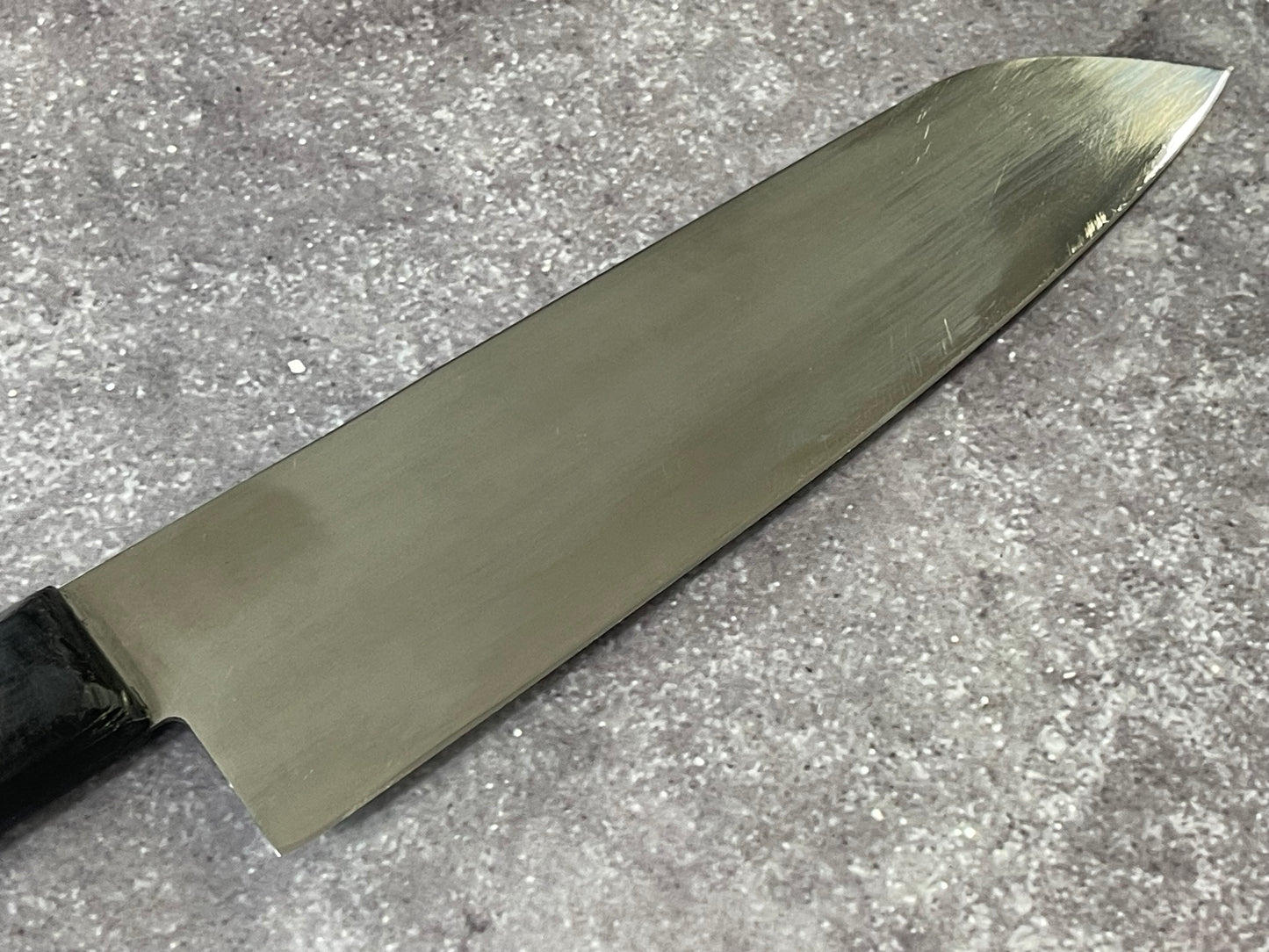
Experience Japanese Kitchen Heritage with a Vintage Aritsugu Santoku
This pre-owned Aritsugu Santoku combines a 170mm carbon steel blade with a wood handle. Recorded as fully forged and made in Japan, it offers a manageable everyday preparation format with the character of a vintage Japanese knife.
The Specs
Recorded brand: Aritsugu
Knife type: Santoku
Blade length: 170mm
Overall length: 300mm
Recorded blade thickness: 1.4mm
Steel: High carbon steel; exact alloy not confirmed
Recorded construction: Fully forged
Recorded hardness: 58 HRC
Handle: Wood
Origin: Made in Japan
Condition: Used / pre-owned
Aritsugu Markings and Heritage
The recorded engraving analysis identifies the prominent vertical characters 有次 as Aritsugu and the smaller 登録 (Tōroku) stamp as registered, in the sense of a registered trademark. The notes tentatively read other markings as 特製 (Tokusei / special quality). That reading remains uncertain and does not establish a specific steel grade or model line.
The original maker notes trace Aritsugu's heritage to 1560 and describe origins as a swordsmith workshop associated with the Japanese Imperial House. This is retained as recorded brand-history context, not authentication of this individual knife's age, workshop or production date.
The Santoku, commonly translated as three virtues, is an all-purpose format for meat, fish and vegetables. Its flat-to-gently-curved edge suits push cuts and light rocking, while the wide blade provides knuckle clearance. Carbon steel can take a keen edge and develops natural patina with use, rewarding careful drying and maintenance without requiring a blanket superiority claim over stainless steel.
Care & Maintenance
Hand wash only, never in the dishwasher
Dry immediately after washing to help prevent rust
Do not soak the wood handle
Natural patina develops with use; remove active rust rather than treating it as patina
Sharpen on a whetstone, preserving the existing edge geometry
Store on a magnetic strip or in a knife block to protect the edge
Age restriction: The purchase of knives is restricted to persons aged 18 years and over in accordance with applicable Australian state and territory laws, including the Queensland Weapons Act 1990 and South Australian Summary Offences Act 1953. By purchasing a knife through this store, you confirm you are aged 18 or over.
Choosing a selection results in a full page refresh.