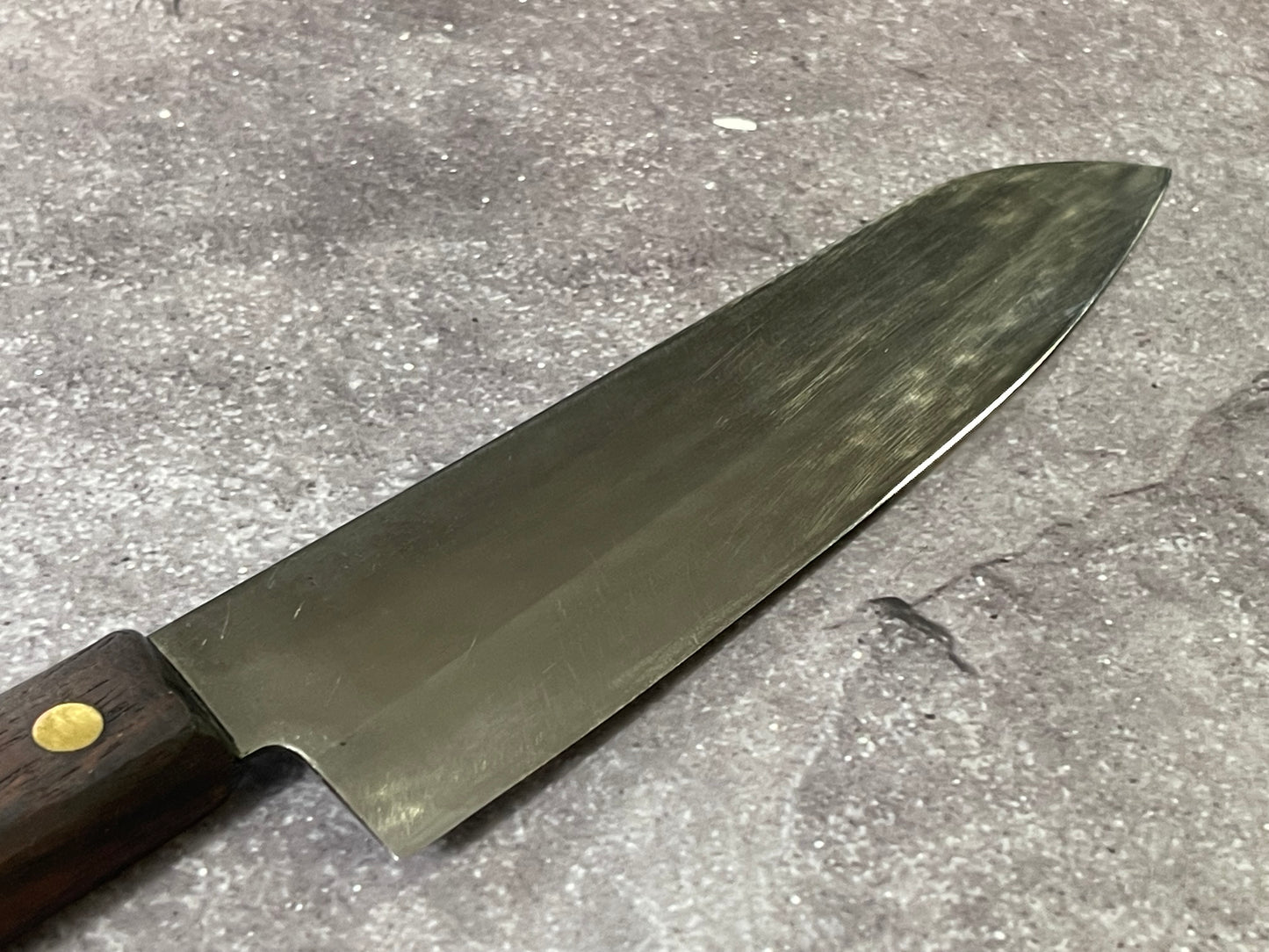
Vintage Japanese Tokusen Konomi Santoku Knife 170mm 1694
Couldn't load pickup availability
Experience Versatile Preparation with a Vintage Tokusen Konomi Santoku
This pre-owned Japanese Santoku combines a 170mm blade with a wood handle and recorded double-bevel geometry. Its all-purpose format suits everyday meat, fish and vegetable preparation.
The Specs
- Recorded brand name: Konomi (木ノ実)
- Recorded inscription: 特撰 木ノ実 (Tokusen Konomi), alongside STAINLESS STEEL
- Knife type: Santoku
- Steel: Unresolved. The original specifications state high carbon steel, while the inscription notes record STAINLESS STEEL; exact alloy is not confirmed
- Recorded hardness: 58 HRC; not independently verified
- Blade length: 170mm
- Overall length: 300mm
- Recorded blade thickness: 1.4mm; measurement position not confirmed
- Bevel: Double bevel
- Recorded construction: Fully forged
- Handle: Wood
- Recorded knife weight: Approximately 120g
- Origin: Japan
- Condition: Vintage, pre-owned
The Konomi Name
The original engraving notes read 特撰 木ノ実 as Tokusen Konomi. They translate Tokusen as special selection or premium grade, a marketing designation rather than proof of a particular steel, quality tier or forging process. Konomi is recorded as the blade's brand name, with translations including nut, fruit or berry. No specific workshop history or production date is established.
The Santoku, commonly translated as three virtues, is an all-purpose Japanese format for meat, fish and vegetables. This example retains its recorded 170mm length and double bevel. The original description conflicts on steel, and calls the 1.4mm measurement both blade thickness and thickness behind the edge. Neither the alloy nor the thickness measurement position is assumed here.
Care & Maintenance
- Hand wash only, never in the dishwasher
- Dry immediately after washing and do not soak the wood handle
- Until the steel is verified, use rust-conscious care and a light coat of food-safe camellia oil before extended storage
- Hone carefully as needed, preserving the existing double-bevel geometry
- Sharpen on a whetstone when needed, following the existing edge rather than assuming an angle
- Store on a magnetic rack or in a knife block to protect the edge
Share