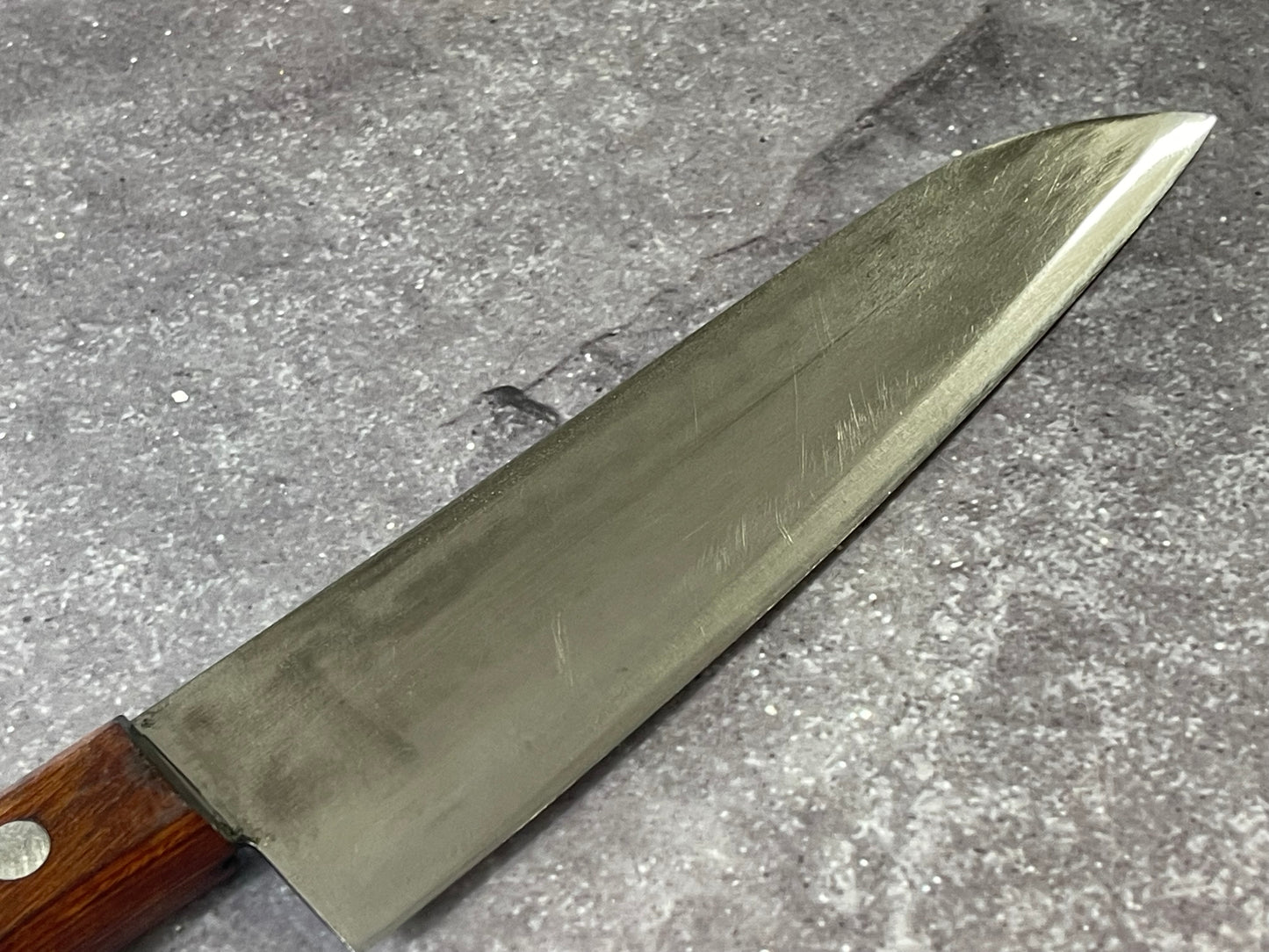
Experience Everyday Japanese Preparation with a Vintage Yoshimune Santoku
This pre-owned Yoshimune Saku Santoku pairs a 160mm high carbon steel blade with a wood handle. Its recorded double bevel offers a compact all-purpose format for meat, fish and vegetable preparation.
The Specs
Recorded maker / brand: Yoshimune
Recorded inscription: 義宗作 (Yoshimune Saku)
Knife type: Santoku
Steel: High carbon steel; exact alloy not recorded
Recorded hardness: 58 HRC
Blade length: 160mm
Overall length: 290mm
Recorded blade thickness: 1.4mm; measurement position not confirmed
Bevel: Double bevel
Recorded construction: Fully forged
Handle: Wood
Recorded knife weight: Approximately 120g
Origin: Japan
Condition: Vintage, pre-owned
The Yoshimune Signature
The original inscription notes read 義宗作 as Yoshimune Saku, meaning made by Yoshimune. They describe a hand-engraved cursive style, identified as Gyōsho / Sōsho. The suffix 作 means made by, but does not by itself establish a forging method.
The earlier notes associate the Yoshimune name with Tosa or Sakai cutlery traditions. That regional attribution and a specific lineage are not established for this individual knife, so neither is presented as confirmed provenance. No production date is assigned.
The Santoku, commonly translated as three virtues, is an all-purpose Japanese format for meat, fish and vegetables. Carbon steel can take a keen edge and rewards careful drying and whetstone maintenance. The original specifications record 1.4mm blade thickness, while the narrative calls it behind the edge. The measurement position remains unconfirmed, so no particular edge thickness is asserted.
Care & Maintenance
Hand wash only, never in the dishwasher
Dry immediately after washing to help prevent rust
Do not soak the wood handle
Apply a light coat of food-safe camellia oil after drying, particularly before storage
Hone carefully as needed, preserving the existing double-bevel geometry
Sharpen on a whetstone when needed
Store on a magnetic rack or in a knife block to protect the edge
Age restriction: The purchase of knives is restricted to persons aged 18 years and over in accordance with applicable Australian state and territory laws, including the Queensland Weapons Act 1990 and South Australian Summary Offences Act 1953. By purchasing a knife through this store, you confirm you are aged 18 or over.
Choosing a selection results in a full page refresh.