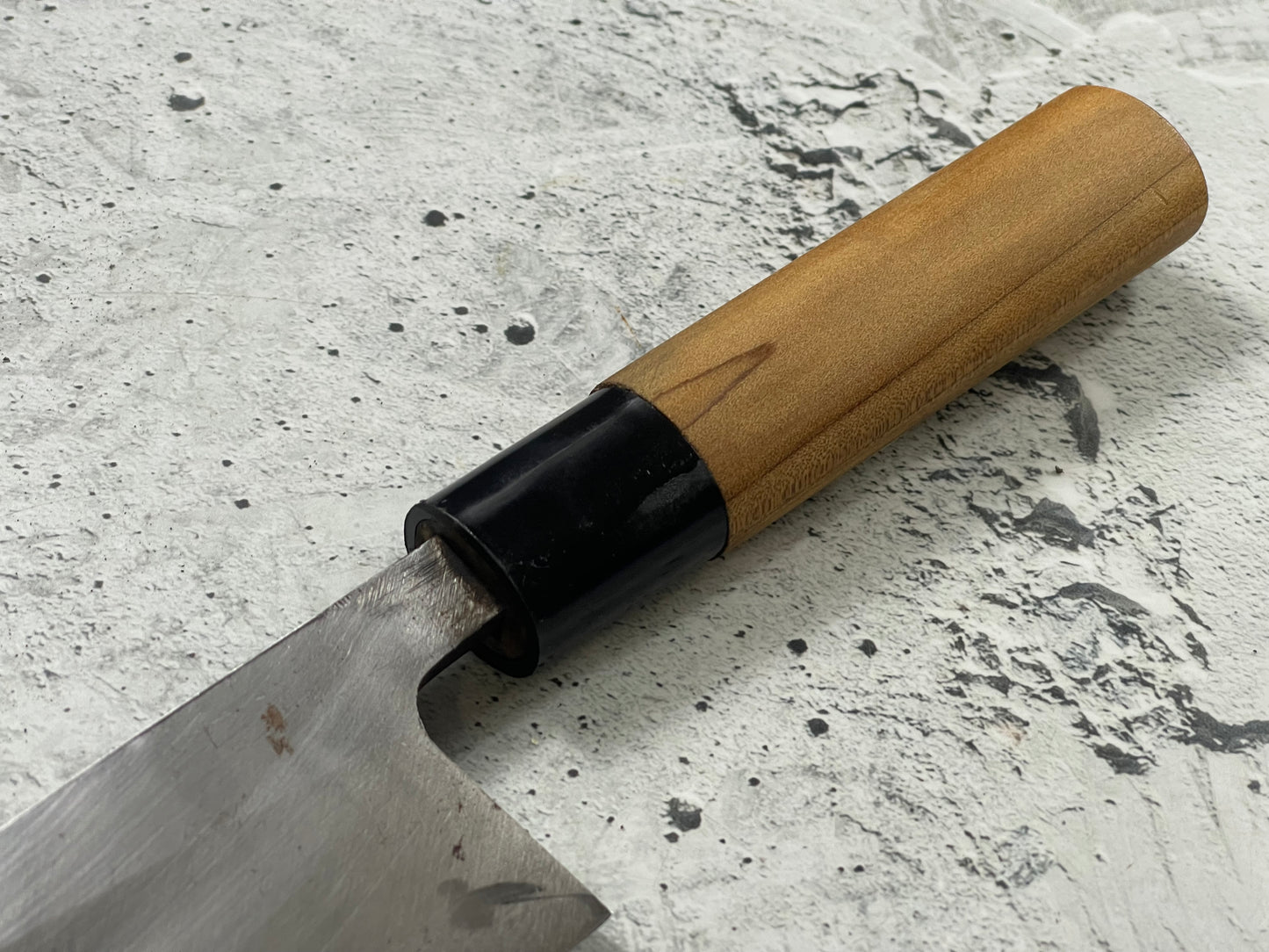
Vintage Japanese Fujiwara Kanefusa Deba Knife 150mm Carbon Steel Made in Japan 1555
Couldn't load pickup availability
Experience a traditional fish-preparation format with a vintage deba
This pre-owned deba is recorded as Fujiwara Kanefusa, with a 150mm carbon steel blade, magnolia wood handle and single-bevel geometry. Its specialist format offers an engaging addition to a Japanese cutlery collection, with handedness and condition to be confirmed before working use.
The Specs
- Recorded brand identification: Fujiwara Kanefusa
- Recorded inscription readings: 藤原 (Fujiwara) and 兼房 (Kanefusa); attribution not independently authenticated
- Knife type: deba
- Steel recorded: carbon steel; exact grade not specified
- Blade length recorded: 150mm
- Overall length recorded: 290mm
- Handle recorded: magnolia wood
- Bevel recorded: single bevel; handedness and edge angle not recorded
- Weight recorded: approximately 200g
- Blade thickness previously listed: 8.8mm; measurement and measurement location require confirmation
- Construction previously listed: fully forged, full tang; not independently verified
- Hardness: earlier 58 HRC figure requires verification
- Origin recorded: Japan
- Condition: vintage, pre-owned; production date not established
Heritage & Use
The recorded inscription readings provide the basis for the Fujiwara Kanefusa identification in this listing. They do not authenticate an individual smith, production era or connection to a particular historical lineage. Earlier notes linking the name to Seki swordmaking and the Muromachi period have not been independently verified for this knife. The deba format is associated with controlled fish preparation, but a thick spine does not make this blade a general-purpose bone chopper. Assess the blade, edge and handle before use; the earlier description of exceptional preservation is not a documented condition assessment.
Care & Maintenance
- Hand wash only; never use a dishwasher
- Dry immediately and avoid soaking the wooden handle
- Remove active rust and apply a light coat of food-safe blade oil before extended storage
- Confirm handedness and existing geometry before sharpening
- Use suitable water stones and single-bevel technique, preserving the main bevel and existing back-face geometry
- Do not convert the edge to a double bevel or use a honing rod; consult a specialist if unsure
- Avoid impact work, frozen food and twisting through bones
- Store clean and dry with the edge protected
Share