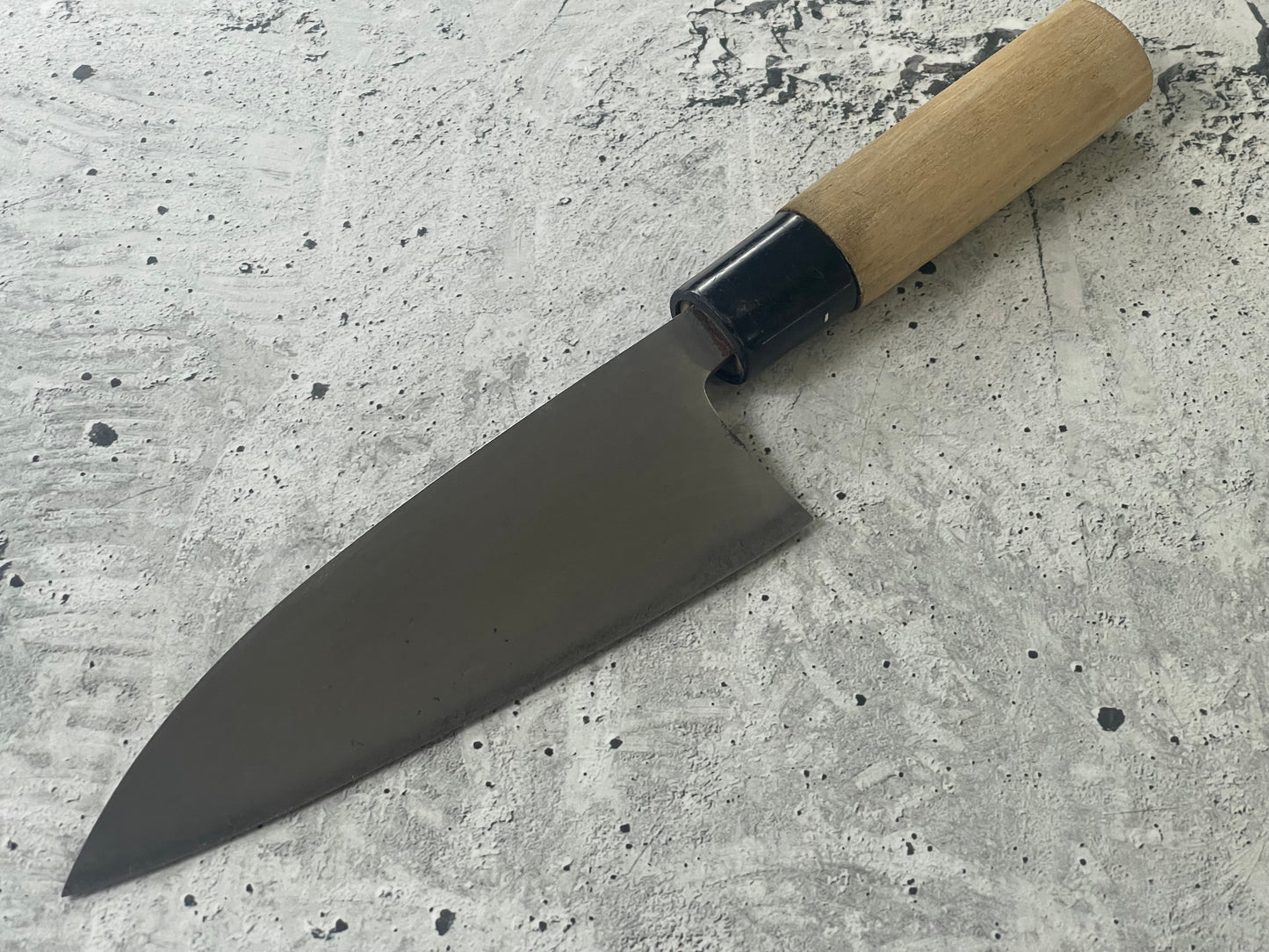
Vintage Japanese Sakai Kaneshige Deba Knife 150mm Carbon Steel Magnolia Handle Made in Japan 1754
Couldn't load pickup availability
Experience traditional fish preparation with a vintage Kaneshige deba
This pre-owned Japanese deba pairs a recorded 150mm carbon steel blade with a magnolia wood handle and single-bevel geometry. Listed as Sakai Kaneshige, it offers a specialist cutlery format after assessing its condition and confirming handedness.
The Specs
- Recorded maker or brand name: Sakai Kaneshige
- Recorded inscription: 堺 / 金重; readings and individual attribution not independently authenticated
- Knife type: deba
- Steel recorded: carbon steel; exact grade not specified
- Blade length recorded: 150mm
- Bevel recorded: single bevel; handedness and edge angle not recorded
- Handle recorded: magnolia wood
- Hardness: earlier 58 HRC figure requires verification
- Overall length, weight and measured spine thickness: not recorded
- Origin recorded: Japan
- Condition: vintage, pre-owned; production date not established
Heritage & Use
The existing inscription notes read 堺 as Sakai and 金重 as Kaneshige. These recorded readings preserve the listing's identification without establishing a specific workshop lineage or individual smith. Earlier references to an Edo-period origin for the deba style are not used to date this knife. The deba format is associated with controlled whole-fish preparation, but the available measurements do not establish a particular spine profile or bone-cutting capability. Check blade integrity, edge condition and handle security before use, and confirm the single bevel's handedness.
Care & Maintenance
- Hand wash only; never use a dishwasher
- Dry immediately and avoid soaking the magnolia handle
- Remove active rust and apply a light coat of food-safe blade oil before extended storage
- Do not use a honing rod
- Confirm handedness before sharpening on suitable water stones
- Preserve the main bevel and existing back-face geometry; do not convert the edge to a double bevel
- Consult a specialist sharpener if unfamiliar with single-bevel maintenance
- Avoid frozen food, impact work and twisting through bones
- Store clean and dry with the edge protected
Share