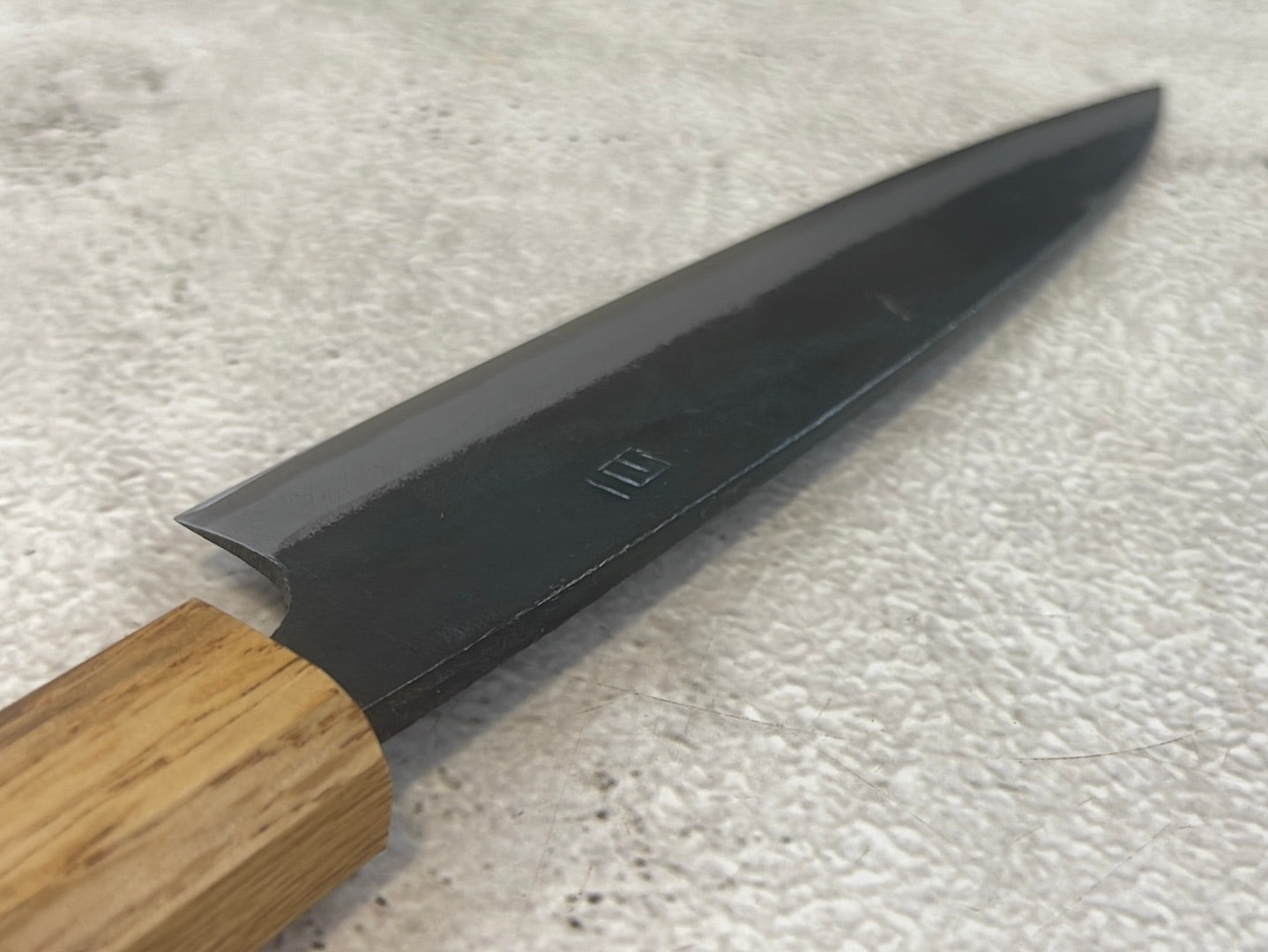
Tsukasa Shiro Kuro Shirogami #1 Yanagiba 135mm - Oak Octagonal Handle
Couldn't load pickup availability
Experience Tosa Craftsmanship in a Kurouchi Yanagiba
The Tsukasa Shiro Kuro Yanagiba 135mm is hand-forged in Tosa, Japan using traditional techniques. Shirogami #1 (White Steel #1) carbon steel with soft iron cladding, finished in kurouchi. A compact sashimi knife built for cooks who want to experience the best of Japanese carbon steel at an accessible entry point.
The Specs
- Steel: Shirogami #1 (White Steel #1) carbon steel, soft iron clad
- Finish: Kurouchi (blacksmith's finish)
- Blade length: 135mm
- Overall length: 270mm
- Blade height at heel: 30mm
- Spine thickness at heel: 2.4mm
- Handle: Oak, octagonal
- Origin: Tosa, Japan
The Tsukasa Shiro Kuro Difference
Tsukasa Shiro Kuro knives are hand-forged in Tosa - a region of Japan with a centuries-long tradition of blade-making - using some of the oldest forging techniques still practised today. The steel is Shirogami #1 (White Steel #1, Hitachi Metals) - a pure high-carbon steel with no alloying additions beyond carbon, making it one of the easiest carbon steels to sharpen to a razor edge. The soft iron cladding protects the reactive core on the blade flats while the kurouchi finish is left intact, giving the knife a rustic, honest character and offering slightly better rust resistance than a fully polished carbon blade. The yanagiba's slender blade is designed for drawing cuts through raw fish in a single, clean stroke - minimising cell damage and producing clean, glossy sashimi slices. At 135mm, this is the most compact yanagiba in the Tsukasa range - ideal as an entry-level sashimi knife or a precise petty-style slicer for home use. The oak octagonal handle is lightweight and traditional.
Care and Maintenance
- Hand wash only - never dishwasher
- Dry immediately after use - Shirogami #1 will rust if left wet
- Apply a light coat of food-safe oil if storing for extended periods
- Expect a natural patina to develop with use - this is normal and protective
- Do not cut frozen food or bones - the edge will chip
- Sharpen with a whetstone to maintain the edge
- Store flat or in a knife roll to protect the blade
Share