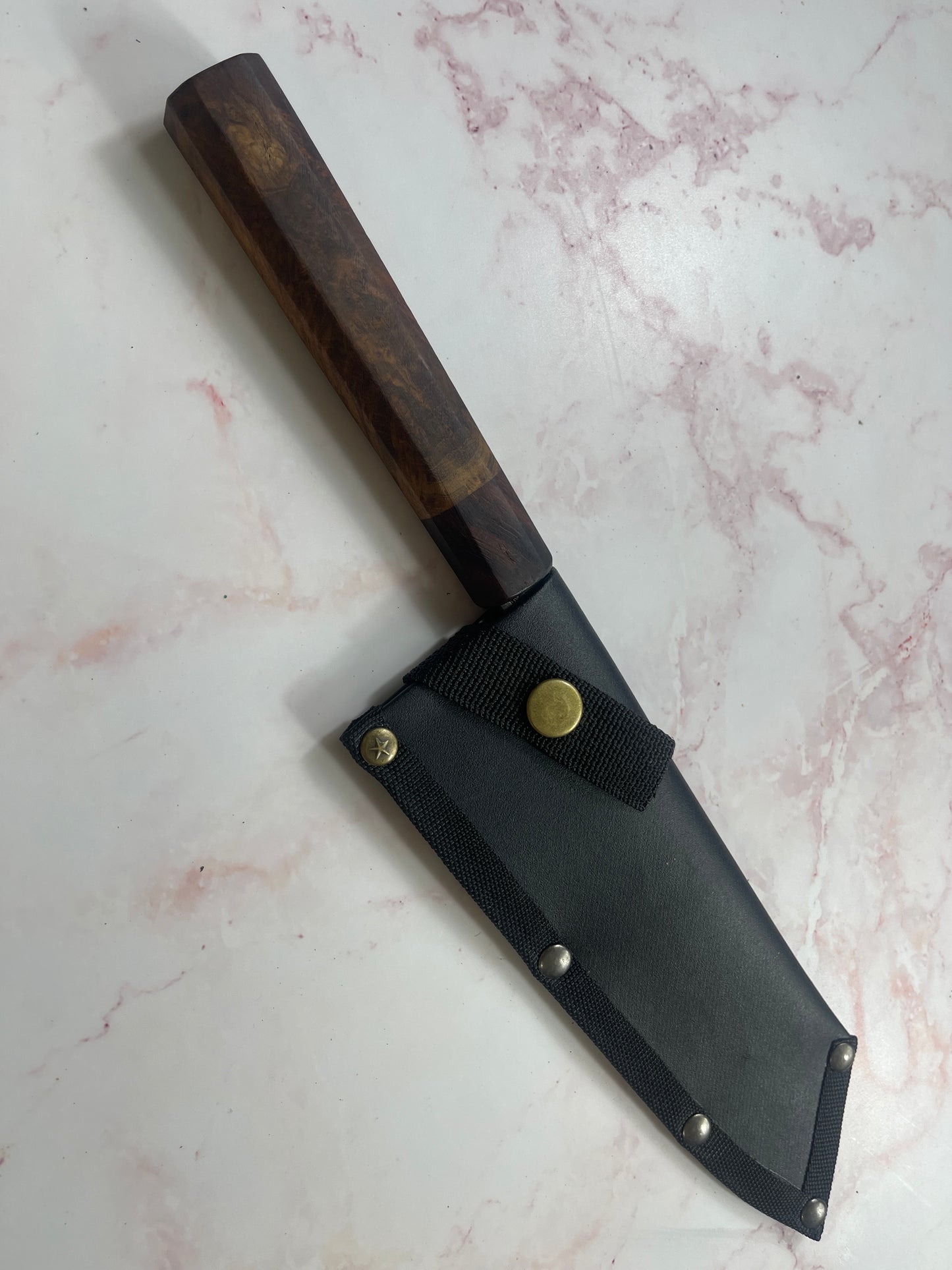
Kitchen Knives ID SanMai Santoku 180mm Nashiji Etched - Jatiwood & Rosewood Handle
Couldn't load pickup availability
Experience Indonesian Blacksmithing in a SanMai Nashiji Santoku
The Kitchen Knives ID SanMai Santoku 180mm Nashiji Etched is hand-forged in Magetan, East Java, Indonesia. SanMai construction - leaf spring high-carbon steel core, soft iron cladding - with a nashiji acid-etched finish and a jatiwood and rosewood octagonal handle. Saya included. A premium all-rounder built using traditional techniques by local Indonesian blacksmiths.
The Specs
- Construction: SanMai - leaf spring high-carbon steel core, soft iron cladding
- Finish: Nashiji, acid-etched
- Blade length: 180mm
- Spine thickness: 3mm, tapered
- Handle: Jatiwood and rosewood, octagonal WA style, 135mm
- Saya: Included
- Origin: Magetan, East Java, Indonesia
The Kitchen Knives ID Difference
Kitchen Knives ID is a Magetan-based knife platform founded by Omar - a knife maker who works alongside local blacksmiths and craftsmen in East Java to produce handmade knives using traditional forging techniques. The platform also supports and showcases other experienced Indonesian knife makers, making each knife a genuine product of local craft tradition. SanMai construction sandwiches a hard leaf spring carbon steel core between layers of soft iron cladding - combining a hard, keen edge with a tough, flexible body. The nashiji acid-etched finish creates a fine, textured surface that reduces drag and prevents food from sticking, with the etching revealing the contrast between core and cladding. The santoku - meaning "three virtues" - handles fish, meat, and vegetables with equal ease. The jatiwood and rosewood octagonal handle is warm, grippy, and distinctly Indonesian.
Care and Maintenance
- Hand wash only - never dishwasher
- Dry immediately after use - carbon steel core will rust if left wet
- Apply a light coat of food-safe oil if storing for extended periods
- Expect a natural patina to develop with use - this is normal and protective
- Do not cut frozen food or bones - the edge will chip
- Sharpen with a whetstone to maintain the edge
- Store in the included saya when not in use
Share