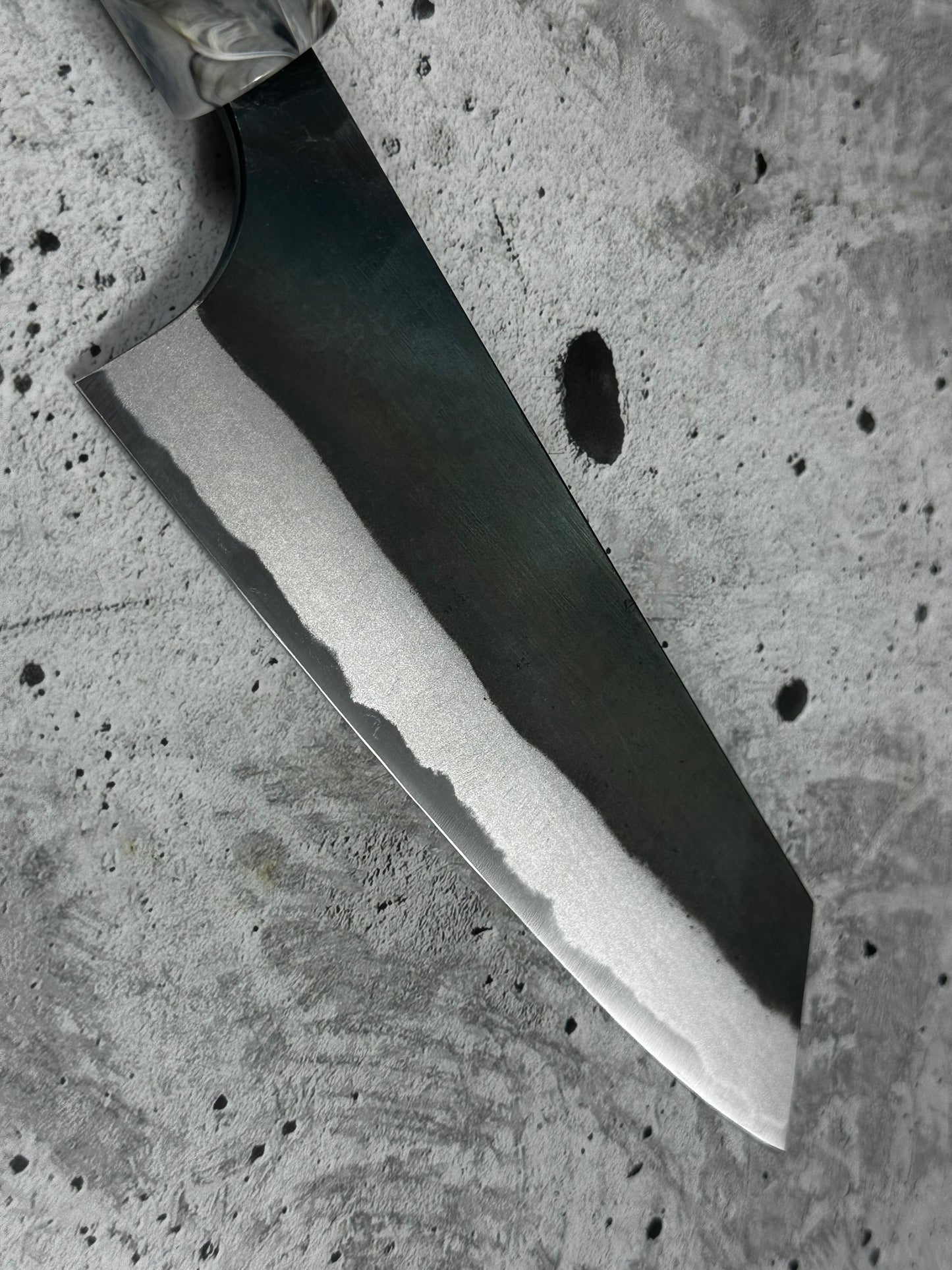
Masakage Mizu Bunka 170mm - Cherry Wood Handle
Couldn't load pickup availability
Experience Aogami #2 carbon steel in the versatile bunka profile - handmade in Japan by Masakage.
The Specs
- Steel: Aogami #2 (Blue Paper #2) carbon steel with carbon steel cladding
- Hardness: 62-64 HRC
- Blade length: 170mm
- Edge grind: Double-edged (50/50)
- Handle: Oval Japanese cherry wood with resin collar
- Finish: Kurouchi (black forge finish)
- Origin: Made in Japan
The Mizu Bunka
Masakage's Mizu collection takes its name from the Japanese word for water - the deep blue-black kurouchi finish evokes the look of cold, still water. Each knife is handmade by master blacksmiths and hand-sharpened by Takayuki Shibata, one of Japan's most respected knife sharpeners. Aogami #2 is a high-carbon steel with added chromium and tungsten for improved wear resistance and edge retention, while retaining the fine grain structure and exceptional sharpness that carbon steel is known for. At 62-64 HRC it takes a keen, refined edge and holds it well through daily prep. The bunka is a traditional Japanese kitchen knife with a flat blade profile similar to the nakiri, but with a distinctive reverse-tanto (angled) tip that makes it more versatile for precision work - scoring, detail cuts, and tasks where a flat-tipped nakiri would be limiting. At 170mm it is a compact, highly capable all-rounder suited to home and professional kitchens alike. The oval cherry wood handle is lightweight and comfortable for extended use.
Care & Maintenance
- Hand wash only - never dishwasher
- Dry immediately and thoroughly after each use - Aogami is reactive carbon steel
- Rinse immediately after contact with acidic ingredients, fish, or salt
- A natural patina will develop on the blade with use - this is normal and protective
- Remove any rust spots immediately with a coarse scrubber and soapy water
- Do not use on frozen food or bones - the blade can chip
- Sharpen on Japanese water stones
- Store on a magnetic strip or in a knife block - avoid loose drawers
Share