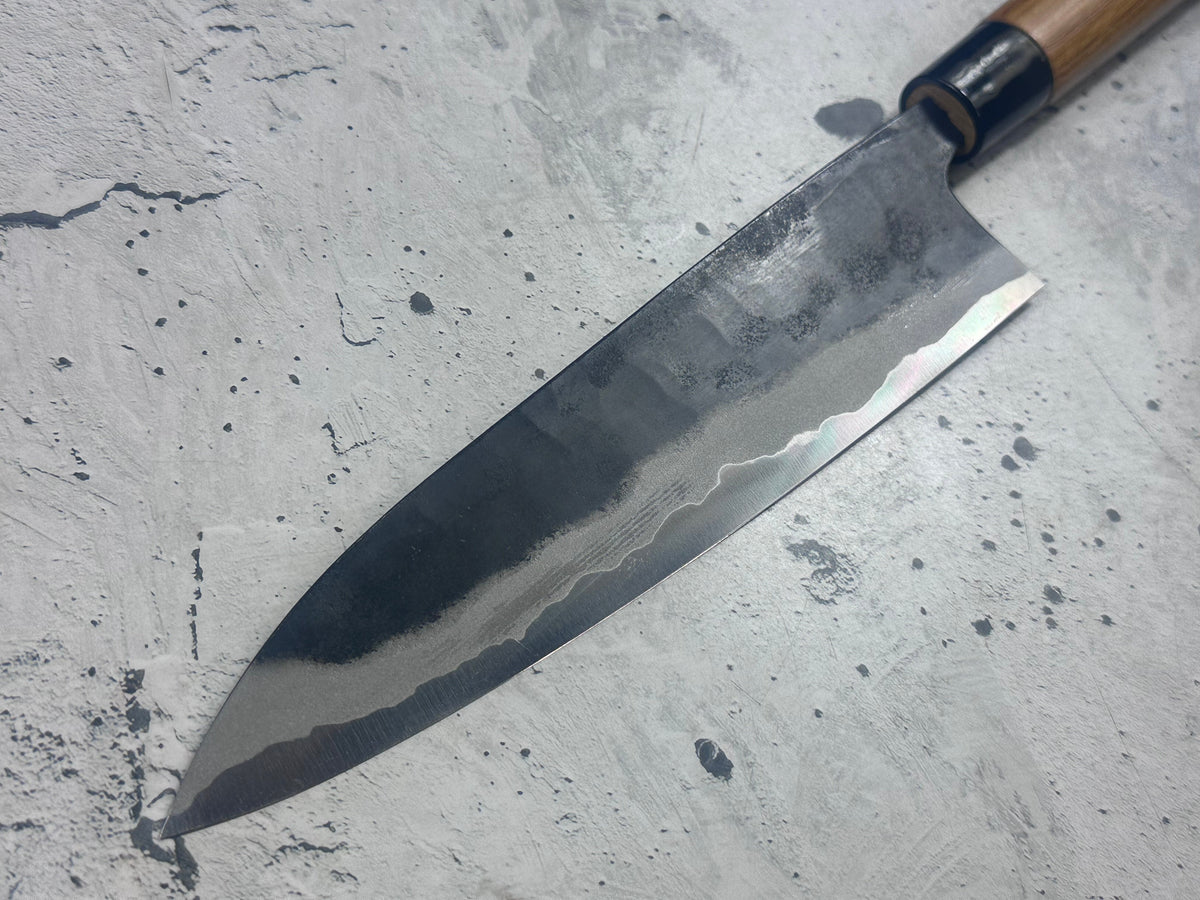
Kyohei Shindo Warikomi Blue #2 Kurouchi Gyuto 210mm
Couldn't load pickup availability
Experience Cult-Status Tosa Craftsmanship in a Kurouchi Gyuto
The Kyohei Shindo Warikomi Blue #2 Kurouchi Gyuto 210mm is hand-forged in Tosa, Japan by blacksmith Kyohei Shindo - a maker building a devoted following for his ultra-thin blade geometry and honest kurouchi aesthetic. Aogami #2 carbon steel core with iron cladding, finished in the blacksmith's raw kurouchi scale. A knife for cooks who want genuine Japanese craft at the cutting edge.
The Specs
- Blacksmith: Kyohei Shindo
- Location: Tosa, Japan
- Steel: Aogami #2 (Blue Paper Steel) carbon steel core
- Cladding: Iron (warikomi construction)
- Finish: Kurouchi (blacksmith's finish)
- Grind: Even double bevel
- Blade length: 210mm
- Handle: Keyaki (Japanese elm) with plastic ferrule
- Origin: Tosa, Japan
The Kyohei Shindo Difference
Kyohei Shindo is a young blacksmith based in Tosa - a region of Japan with a centuries-long tradition of blade-making - who is rapidly gaining a cult following for his ultra-thin knife designs and exceptional fit and finish at an accessible price point. The warikomi construction sandwiches the Aogami #2 carbon steel core between iron cladding, protecting the reactive core on the blade flats while keeping the cutting edge exposed for maximum sharpness. Aogami #2 (Blue Paper Steel, Hitachi Metals) is a high-carbon steel prized for its ability to take an exceptionally sharp edge and hold it through demanding prep work. The kurouchi finish is the raw blacksmith's scale left on the blade after forging - it offers a degree of rust resistance on the cladding and gives the knife an honest, unpolished character. At 210mm, the gyuto is the workhorse of the Japanese kitchen - long enough for full-length slicing strokes across large proteins and vegetables, versatile enough for everyday prep from fine brunoise to breaking down whole fish.
Care and Maintenance
- Hand wash only - never dishwasher
- Dry immediately after use - Aogami #2 will rust if left wet
- Apply a light coat of food-safe oil if storing for extended periods
- Expect a natural patina to develop with use - this is normal and protective
- Do not cut frozen food or bones - the edge will chip
- Sharpen with a whetstone to maintain the edge
- Store on a magnetic strip or in a knife block
Share