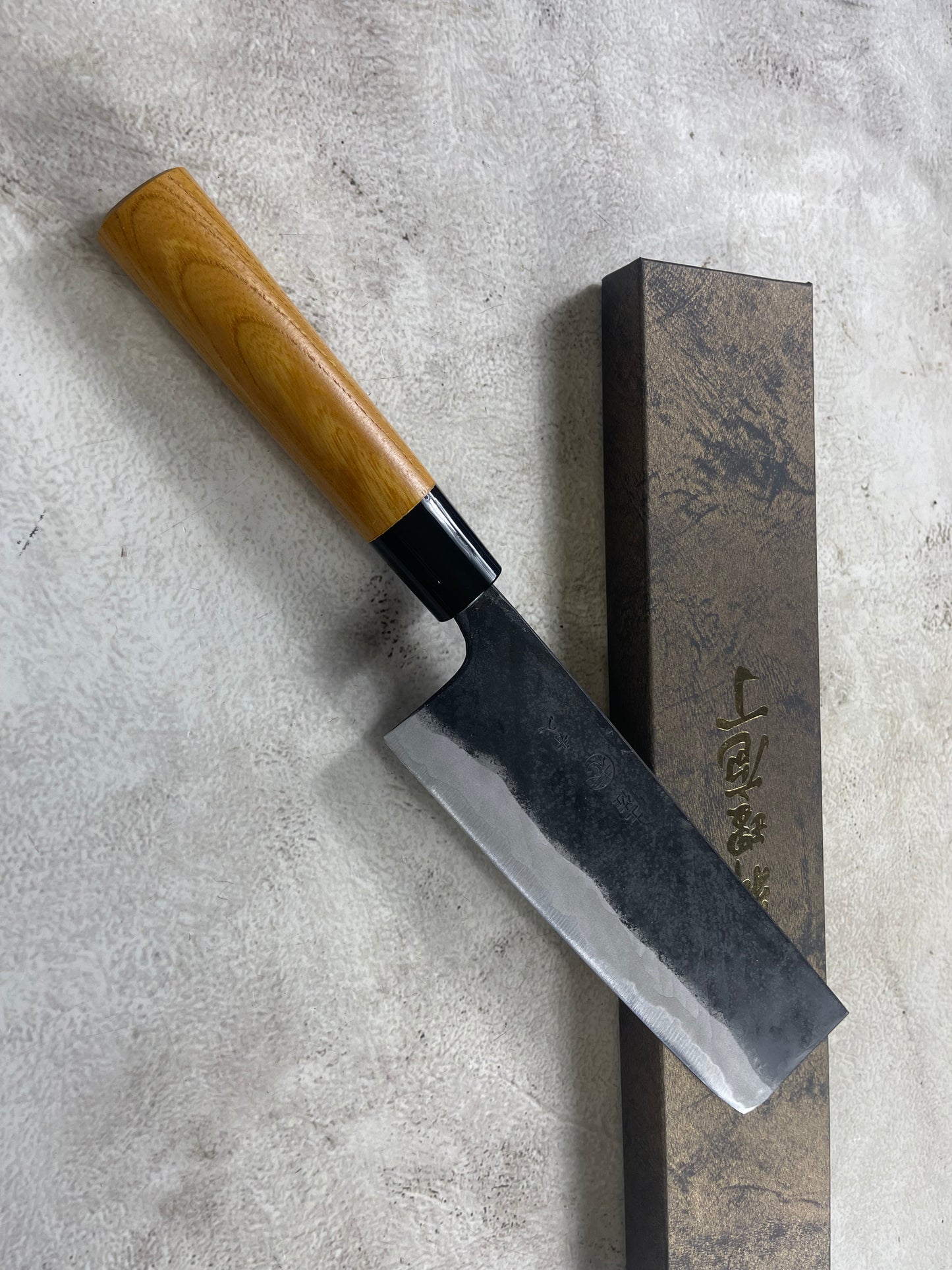
Kyohei Shindo Warikomi Blue #2 Kurouchi 165mm Nakiri with Keyaki Wa Handle and Plastic Ferrule - Made in Japan
Kyohei Shindo Warikomi Blue #2 Kurouchi 165mm Nakiri with Keyaki Wa Handle and Plastic Ferrule - Made in Japan
Couldn't load pickup availability
Experience Cult Blacksmith Precision in a Kurouchi Nakiri
Kyohei Shindo is a talented blacksmith based in Tosa, Japan, growing a cult following for his ultra-thin knife designs. This Warikomi Blue #2 Kurouchi Nakiri 165mm pairs reactive Aogami #2 carbon steel with an iron cladding and a rustic kurouchi (blacksmith's) finish - a working knife with serious character and a razor-thin grind.
The Specs
- Blacksmith: Kyohei Shindo
- Steel: Aogami #2 (Blue #2) carbon steel
- Cladding: Iron (Warikomi construction)
- Finish: Kurouchi (blacksmith's forge finish)
- Grind: Even 50/50 double bevel
- Blade length: 165mm
- Blade height: 53.4mm
- Spine thickness: 4.5mm with blacksmith taper to tip
- Weight: 134g
- Handle: Keyaki (Japanese elm) with plastic ferrule (Wa style)
- Origin: Tosa, Japan
The Shindo Difference
Kyohei Shindo's knives are known for their ultra-thin grinds and exceptional fit and finish for the price point. Aogami #2 (Blue #2) is a high-carbon tool steel made by Hitachi Metals - prized for its ability to take an extremely fine, keen edge and hold it through demanding prep work. The iron cladding in the Warikomi construction protects the core while allowing the kurouchi forge finish to remain on the flat, giving the knife a raw, artisan aesthetic that develops character with use. The nakiri is Japan's dedicated vegetable knife - flat-profiled, double-bevelled, and designed for the push-cut through vegetables with no rocking. At 165mm it is the standard nakiri length - compact enough for precise work, tall enough for efficient chopping.
Care and Maintenance
- Hand wash only - never dishwasher
- Dry immediately after use - Aogami #2 will rust if left wet
- Apply a light coat of food-safe oil if storing for extended periods
- Expect a natural patina to develop with use - this is normal and protective
- Sharpen with a whetstone - Aogami #2 responds beautifully to Japanese water stones
- Do not use a honing rod - use a whetstone for maintenance
- Store on a magnetic strip or in a saya to protect the edge
Share