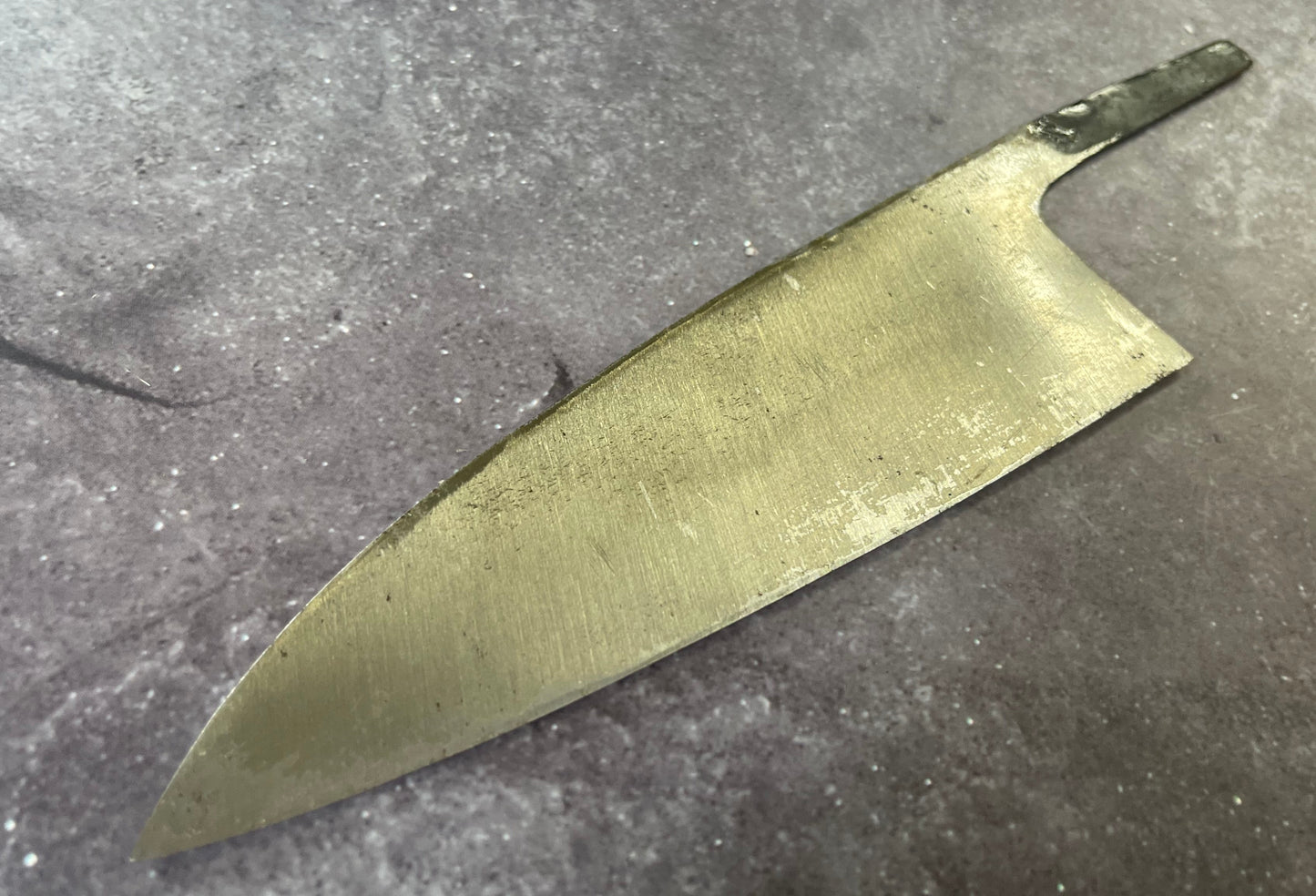
Japanese Project Knife Set 2-Piece Deba and Nakiri Carbon Steel Made in Japan 1623
Couldn't load pickup availability
Experience a hands-on restoration project with a Japanese deba and nakiri
This vintage two-piece project set pairs a recorded 160mm deba with a 170mm nakiri, both listed as carbon steel and supplied without handles. Intended for assessment and finishing, these blades need securely fitted handles and a completed condition check before kitchen use.
The Specs
- Set: two handleless project knives
- Steel recorded: carbon steel; exact grades not specified
- Deba: recorded 160mm blade, single bevel; handedness not recorded
- Nakiri: recorded 170mm blade, double bevel
- Handles: none; appropriate handle fitting required
- Construction previously listed: forged; manufacturing method not independently verified
- Hardness: earlier 58 HRC figure requires verification
- Overall lengths, weights and edge angles: not recorded
- Makers and production dates: not recorded
- Origin recorded: Japan
- Condition: vintage, unfinished project set
Heritage & Use
These two recorded knife formats offer different starting points for a restoration project. The deba format is associated with fish preparation, while the nakiri format is associated with vegetable cutting. Their recorded bevels call for different sharpening approaches, and the deba's handedness needs confirmation. No maker history or production era has been established. Assess the blades, tangs, corrosion and edges before deciding what restoration is appropriate; handles are not necessarily the only work required.
Care & Maintenance
- Fit secure, appropriate handles and assess the completed knives before kitchen use
- Handle exposed edges and tangs carefully; never use bare tangs as handles
- Hand wash only and dry immediately; avoid soaking fitted handles
- Remove active rust and apply a light coat of food-safe blade oil for extended storage
- Sharpen with suitable stones once handles are secure, preserving each blade's existing geometry
- Use single-bevel technique for the recorded deba and double-bevel technique for the recorded nakiri; consult a specialist where uncertain
- Avoid honing rods on the single-bevel deba; select maintenance appropriate to each completed edge
- Store securely with exposed tangs and edges protected
Share